How to hide sample images of illustrations and manga | Make it look stylish while preventing spoilers
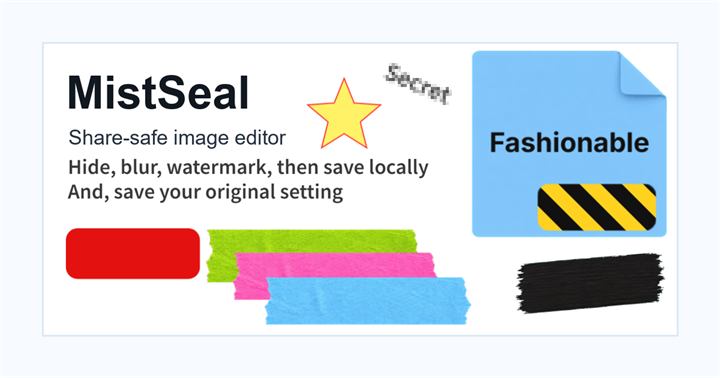
When introducing illustrations, manga, or design works on social media or sales pages, you may want to convey the atmosphere of the work while hiding unpublished parts or parts that you don't want to show.
You can hide it by simply painting it black, but appearance is also important when it comes to work samples. By using masking tape, notepads, ink covers, warning tape, watermarks, etc., you can control the amount of exposure and leave an impression on your work.
First thing you need to decide: what to hide and what to show
Before creating a sample image, decide the range that can be made public. If you hide everything too much, it becomes difficult to convey the charm of the work, and on the other hand, if you show too much, important scenes and unreleased parts may be revealed before purchase.
The following points are easy to check:
- Are you showing unreleased frames or punch lines?
- Is the entire work readable as is?
- Are you able to leave the part you want to lead to the sales page?
- Where to put the title, author name, and social media ID
- Is it presented in a way that will not cause problems even if it is reprinted with just a sample image?
It will be easier to put together a sample if you leave the main character of the work and the parts that give you an idea of the atmosphere, and hide the ending, important lines, unreleased differences, high-resolution parts for sale, etc.
Different ways to hide
Solid color: For areas that you do not want to see clearly
Solid coloring is suitable for areas that you want to be sure to hide, such as important lines, undisclosed information, and parts that have not yet been sold.
If you want to make text and fine prints unreadable, cover the area a little wider so that no edges remain. It is used in situations where you want to prioritize not showing the content rather than showing the appearance.
Masking tape: When you want to preserve the atmosphere of your work
Masking tape is great when you want to show what you're hiding, but still give a lighter impression than painting in black.
- Some frames of the manga
- Unpublished parts of illustrations
- Rough and parts in progress
- Additional elements to be released
By matching the colors to the color scheme of your work, it will be easier to match the mood of the entire posted image.
Notepad: When you want to add and hide supplementary text
Memo pad covers are suitable when you want to briefly convey the reason for hiding something, such as "disclosed in the main story," "continued on the sales page," or "beware of spoilers."
However, if you add too many characters, the explanation will stand out more than the work itself. It is recommended that supplementary notes be short and placed in a position that does not distract from the main focus of the work.
Ink cover: When you want to hide it strongly and make it look closer to the work
Covers that look like ink or brush painting can be used when you want to hide undisclosed parts while leaving more expression than solid painting.
It goes well with Japanese-style works, manga, illustrations with a dark atmosphere, and rough production records. Depending on the work, using a thick cover will make it easier to prevent omissions from being hidden, rather than thin handwriting.
Warning tape: When you want to highlight spoilers or warnings
Warning tape is suitable when you want to clearly indicate spoilers, warnings for viewing, information that has not yet been published, etc.
Because they stand out, it's easier to put them together if you cover only a portion of the area that you don't want to show, rather than layering them in the center of your work.
How to place and think about watermarking
Sample images may include the author's name, social media ID, shop name, URL, etc. Watermarks do not completely prevent reprinting, but they can help indicate the origin of an image.
Add a small signature
This is a method of placing the author's name and social media ID in a small form in the bottom right corner or margin of the work. Suitable when you want to show the entire work.
Enter the URL or shop name at the edge of the image
If you want to direct people to a sales page or portfolio, enter a short URL or shop name at the edge of the image. Easy-to-remember account names and short URLs are easier to read than long texts.
Use tile watermarks
If you want to make it difficult for the entire image to be used as is, another option is a tile watermark that repeats thin text. However, a tile watermark that is too dark will make your work difficult to see. If you prioritize how to present your work, it will be easier to use it only for necessary images.
Procedure for creating sample images with MistSeal
1. Open the work image
Open an image to be used for publication. Before publishing the original data as is, check the range to be shown and the range to be hidden.### 2. Cover unpublished parts
Fill important areas with solid paint, and add masking tape or ink covers to areas where you want to preserve the atmosphere.
Please enlarge the cover to make sure it covers the edge of the area you want to hide.
3. Add author name, shop name, and supplements
Add the author's name, social media ID, shop name, and short supporting text as needed. Avoid overlaying the text on the main character's face or important images.
4. Save in public size
Export as JPG, PNG, WebP, etc. depending on the posting destination or sales page. If you don't need to publish the full-size, high-resolution images as they are, it will be easier to manage them if you prepare a separate size for publishing.
Common mistakes with sample images
- The edges of lines or pictures that you want to hide remain.
- There are so many tapes and notepads that you can barely see your work.
- The watermark is too dark and ruins the impression of the work.
- The author name and URL are too small to read.
- You hid important scenes, but wrote too much in your post.
- You can read the entire work just by looking at the sample images.
After creating an image, it will be easier to review the size of the text and watermark by checking it on a smartphone display.
3 rules for stylishly hiding spoiler images
When processing to hide work samples, we check to see if any information that should not be read remains before adjusting the appearance. It is especially important to cover the lines, punchlines, unpublished differences, and sales parts of the manga with a margin so that they cannot be seen from the edge of the cover.
1. Cover the parts that protect the contents with opaque covers: For fine text and pictures, choose solid paint or thick covers instead of semi-transparent materials.
2. Use design materials only in areas where you want to show off the atmosphere: Use masking tape, ink, memo pads, and warning tape in areas where you want to create a sense of ``hiddenness.''
3. Make the structure more than just a sample: While leaving parts that convey the charm of the work, create blank space that will make people interested in the continuation or the main story.
The appropriate method for "hiding part of an image" differs depending on whether the purpose is to protect personal information or to prevent spoilers. If you want to ensure that personal information or character strings are unreadable, prioritize opaque solid coloring over design.
Frequently asked questions
How many sample images should I show?
It is easy to use the idea of hiding the ending, important scenes, and parts you want to sell while leaving a range that conveys the atmosphere, design, and theme of the work. This will vary depending on the type of work and how it will be sold, so it will be easier to organize it if you decide on the ``role to display'' first.
Which is better, black paint or masking tape?
If you want to definitely hide the contents, solid painting is suitable. Masking tape or ink covers are suitable if you want to preserve the atmosphere of your work, or if you want to show what is hidden as a design.
Can I prevent unauthorized reproduction by adding a watermark?
It cannot be completely prevented. Watermarks are used to indicate the source of images and to prevent unauthorized use. It will be easier to handle if you combine it with methods such as preparing a size for publication, hiding unpublished parts, and including author information in the post body.
Summary
When looking at work samples, it is important to decide in advance which parts to show and which parts to hide, rather than just hiding them.
You can make it easier to prepare the image for publication by making sure to hide the important parts with solid paint, and using masking tape, notepad, ink covers, etc. for the parts where you want to preserve the atmosphere of the work.
When hiding spoiler images, which is better: mosaic or stamp?
If you don't want to make sure dialogue or important images are visible, an opaque cover or black paint is better than a mosaic. Stamps and masking tape are easy to use when you want to hide something as a design.
Edit an Image
Use Easy Mode for quick hiding, or Advanced Mode for detailed layers, logos, and export settings.